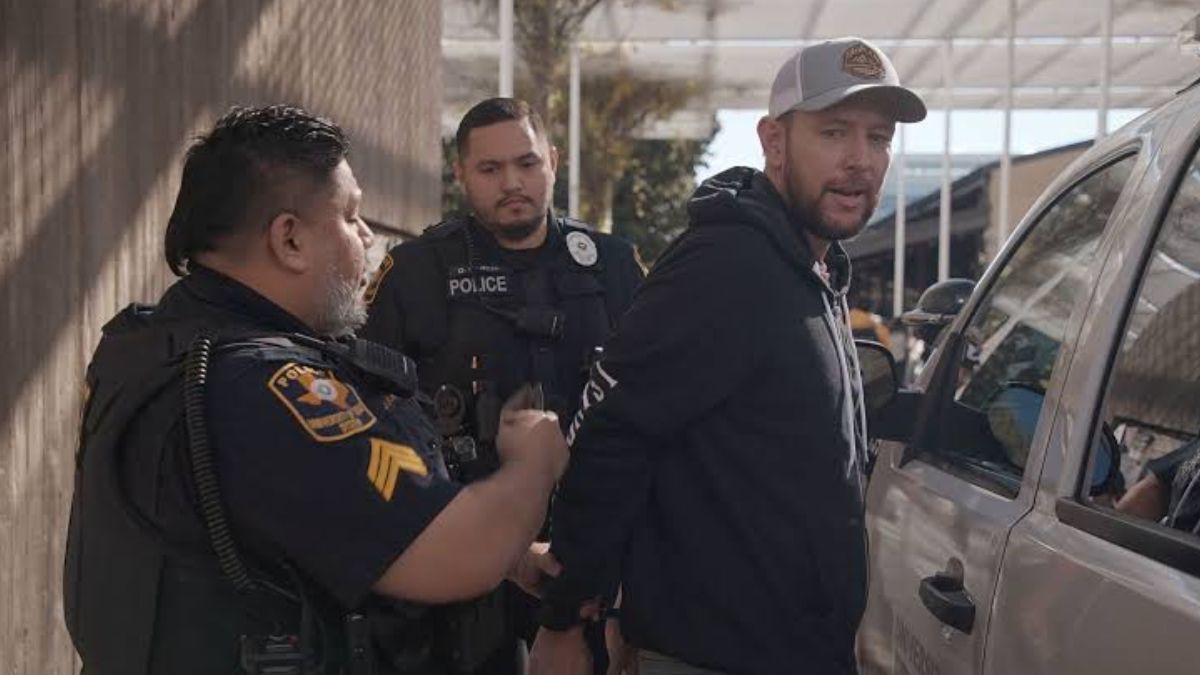
T. Russell Hunter, the founder of Abolitionists Rising, reportedly was arrested at the University of Texas at Dallas following a discussion about abortion and Christianity with students.
The incident has attracted attention on social media, where supporters are questioning the university’s handling of the situation and raising concerns about freedom of speech.
The arrest was highlighted in a recent Instagram post by @mike_thecop, who said he would be following the case because he believed Hunter may have been wrongly arrested for exercising his First Amendment rights.
According to Abolitionists Rising, Hunter had spent approximately two and a half hours speaking peacefully with students about abortion and the Christian faith before a university administrator intervened.
The organization identified the administrator as Tricia Losavio, Associate Dean of Health and Wellness Initiatives. Its statement claimed that Losavio asked Hunter to leave campus after receiving complaints from students.
However, Abolitionists Rising alleged that several students who were present wanted Hunter to remain and continue the discussion. Despite those alleged objections, the administrator contacted campus police.
Organization Raises Concerns About Police Response
Abolitionists Rising claimed that officers handcuffed Hunter within approximately 90 seconds of arriving at the scene.
The organization also alleged that police refused to consider its legal arguments explaining why Hunter’s activities were protected under the First Amendment. According to its account, officers also declined to communicate with the group’s attorneys.
Hunter reportedly remained in custody overnight while awaiting a hearing before a judge.
The organization subsequently shared its concerns about the arrest, arguing that peaceful conversations involving religious and political viewpoints should be permitted, even when the subject is controversial.
The First Amendment protects freedom of speech, but questions about campus access, university regulations, and the circumstances of an arrest can affect how those protections apply in a particular situation.
The specific charges against Hunter and the official explanation for his arrest have not been established by the social media statement.
Social Media Users React to T. Russell Hunter Arrest
The incident quickly generated reactions from Instagram users, with many expressing support for Hunter and questioning the decision to involve law enforcement.
Several commenters suggested that Hunter could pursue legal action against the university and the officers involved. Some also predicted that the case could lead to a lawsuit involving claims of First Amendment violations.
Other users pointed out that university campuses may have rules governing visitors and access to private or restricted property. This prompted further discussion about whether Hunter was asked to leave because of campus regulations or because of complaints about his message.
Some supporters also shared personal messages of encouragement, saying they hoped Hunter would be released and that the situation would receive proper legal attention.
The incident has brought renewed attention to the debate over free speech on university campuses, particularly when individuals express religious or political opinions that others may find controversial.
Further details about Hunter’s court hearing, the reason for his arrest, and any official response from the University of Texas at Dallas remain important to understanding the case.
Leave a Reply